
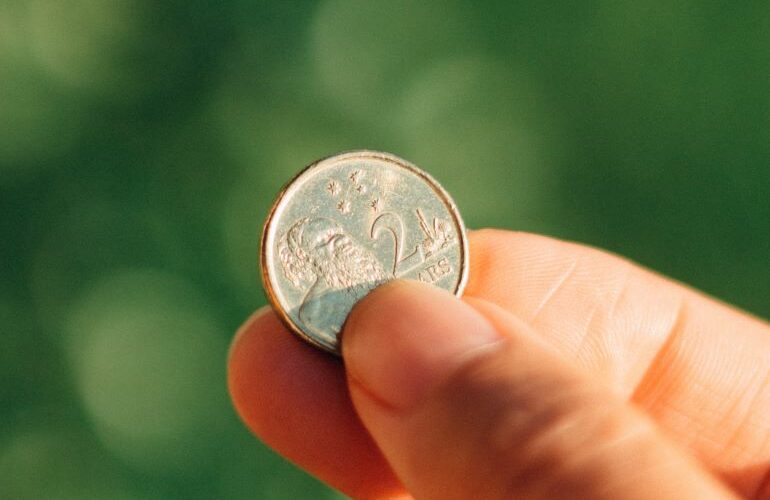
Since 1927, the minimum donation that can be claimed as a tax deduction has been £1, and after the introduction of decimal currency in 1966, $2.00.
The Treasury Laws Amendment (Delivering an Efficient and Trusted Tax System) Bill 2026 has done away with the minimum donation, and after 1 July 2026 the condition is removed. The provision applies retrospectively to donations or gifts made on or after 1 July 2024.
If you donate just a cent to a Deductible Gift Recipient, you can claim it as a deduction on your 2024-25 taxation return and thereafter. If you have already filed your tax return, it may not be economical to amend your return to claim a deduction for a mere $2.00.
The reform of removing the $2 donation threshold was a recommendation of the Productivity Commission’s 2024 Future foundations for giving report. The report suggested that removing the threshold may provide a small additional incentive to make such ‘micro-donations’ such as ‘round up’ donations at supermarkets and other stores.
A Long and Winding Road to Reform
The 1995 Industry Commission Report on Charitable Organisations received opposed submissions. Some argued that the threshold should be raised to account for inflation, while others cautioned that raising it could discourage lower-income donors who rely on smaller, frequent contributions. The Commission concluded that organisations are best positioned to conduct their own cost-benefit analysis regarding small donations. The solution was to abolish the statutory $2 limit, granting recipients the autonomy to establish their own internal thresholds for issuing tax-deductible receipts.
In contrast, the 2009/10 Henry Tax Review recommended retaining gift deductibility but raising the threshold significantly from $2 to $25 per recipient organisation. The rationale for this recommendation was to streamline operations and alleviate compliance burdens. The Review determined that a $25 threshold would drastically reduce the reporting burden on donors who are required to retain physical or digital receipts for audit purposes, while concurrently relieving charities from the administrative overhead of issuing receipts for nominal amounts.
The 2013 Not-for-Profit Sector Tax Concession Working Group Final Report fundamentally disagreed with increasing the limit, instead aligning with the 1995 Industry Commission by recommending its complete abolition. It noted that the $2 minimum is a clear historical anachronism and that tax law does not explicitly require recipients to issue receipts. Removing the minimum amount entirely would streamline the administration of donations without posing a risk to the integrity of the tax system.
Minister Leigh announced the acceptance of the Government of the 2024 Report recommendation in December 2024 and was part of the 2024–25 Mid-Year Economic Fiscal Outlook (MYEFO). 197). The law was finally changed with the assent to the amending Act on 30 June 2026.
How will it work?
It is anticipated that the ATO may provide new guidance on its website.
To date, entities with DGR status are not required to provide receipts for donations, although where they do provide a receipt, it must contain certain details such as the charity name and ABN. Donors can use other evidence as a record of their donation to claim a tax deduction, including bank statements, credit card records, employer statements or retail receipts where donations are collected by third parties at the point of sale. Donors can also claim individual donations of $2 or more without evidence (such as to bucket appeals) up to a total of $10.
Businesses will likely be able to engage with intermediary digital platforms to record donations and provide donors with an annual statement of donations for tax purposes.
Minister Leigh mentioned in his Parliamentary speech that platforms are already available. “Rounda” is a microdonation app that lets you choose your charity and securely link cards to contribute. “The Difference” allows users to donate change from everyday purchases automatically and includes a ’round-up for change’ approach. “GoGive” is a tool that charities can add to their websites, allowing supporters to set up round-up deductions. ING’s Everyday Round Up allows customers to round up purchases to the nearest $1 or $5, with the amount going to charity.
How much more will be raised?
As for how much will be raised, it remains to be seen. The Explanatory Memorandum to the Bill indicated that over the first three years the financial impact would result in a ‘negligible decrease in receipts’ to the Treasury.
Minister Leigh speaking to the Bill in Parliament was more optimistic, saying that “Woolworths allowed customers at the till to round up for charity and, in a single month, raised $770,000 for Foodbank.”
While this particular reform will not solely deliver a doubling of philanthropy by 2030, it is another avenue for ever resourceful fundraisers to seek resources for their cause.